Comfort Zones
Organized by New Uncanny
November 23 - December 20, 2024
New Uncanny is happy to present COMFORT ZONES, featuring work by Dahlia Bloomstone, Ilya Fedotov-Fedorov, Sasha Fishman, Cal Fish, Khanh Le Le, Miles Scharff, Diane Severin Nguyen, Miriam Simun, Craig Jun Li, Amadeo Morelos, Vadim Pugin, Alex Shchurenkov, and Dexter Vandersall.
New Uncanny’s last show at 2335 12th Avenue probes the anxious quality of our space, presenting artworks which obscure or complicate the uneasy feeling which often accompanies a visit to an abandoned industrial facility.
Taking inspiration from the genesis of the term “Uncanny Valley” – initially coined by Masahiro Mori to describe the terrifying quality objects take on when coming too close to human resemblance – we seek to find and play with the limits of comfort. If Mori’s valley is preceded by a “safe level of affinity [reached] by deliberately pursuing a nonhuman design”, we seek to stand on this precipice and look down into the depths.
Upon entering the gallery, one notices the air change, a chill set in, and the decades of undisturbed material on the walls begin to shudder. In the gaps of the office’s sagging drop ceilings and the main floor’s cracked wooden panels, visitors imagine what else might occupy the building, real and paranormal, producing their own horror in the lacunae.
At first glance, the artworks offer a fleeting distraction from the troubles of their environment, only for their comforts to dissipate, uncovering even greater crises for the viewer to confront. Warming images of suns, perfect gardens of white petaled flowers, cute animated sharks - all fall into the abyss of the uncanny, compromised by the ecological disasters, pseudo scientific psychoses, and states of divine surveillance. Unable to hide their essence, the works writhe in a state of tension, attempting to keep up appearances while collapsing from within.
Khanh Le Le’s “January 1970 - January 2000” lies in the corner, a discrete stack of deadstock fabric which accumulate to form a giant mille crepe. In mass produced bootleg clothing production, neat piles facilitate fabric cutting. These pieces, however, are punctured by a small hole, rendering them useless. Within the orderly soft tissue is an unhealed cut, a dim red vortex breathing and waiting below.
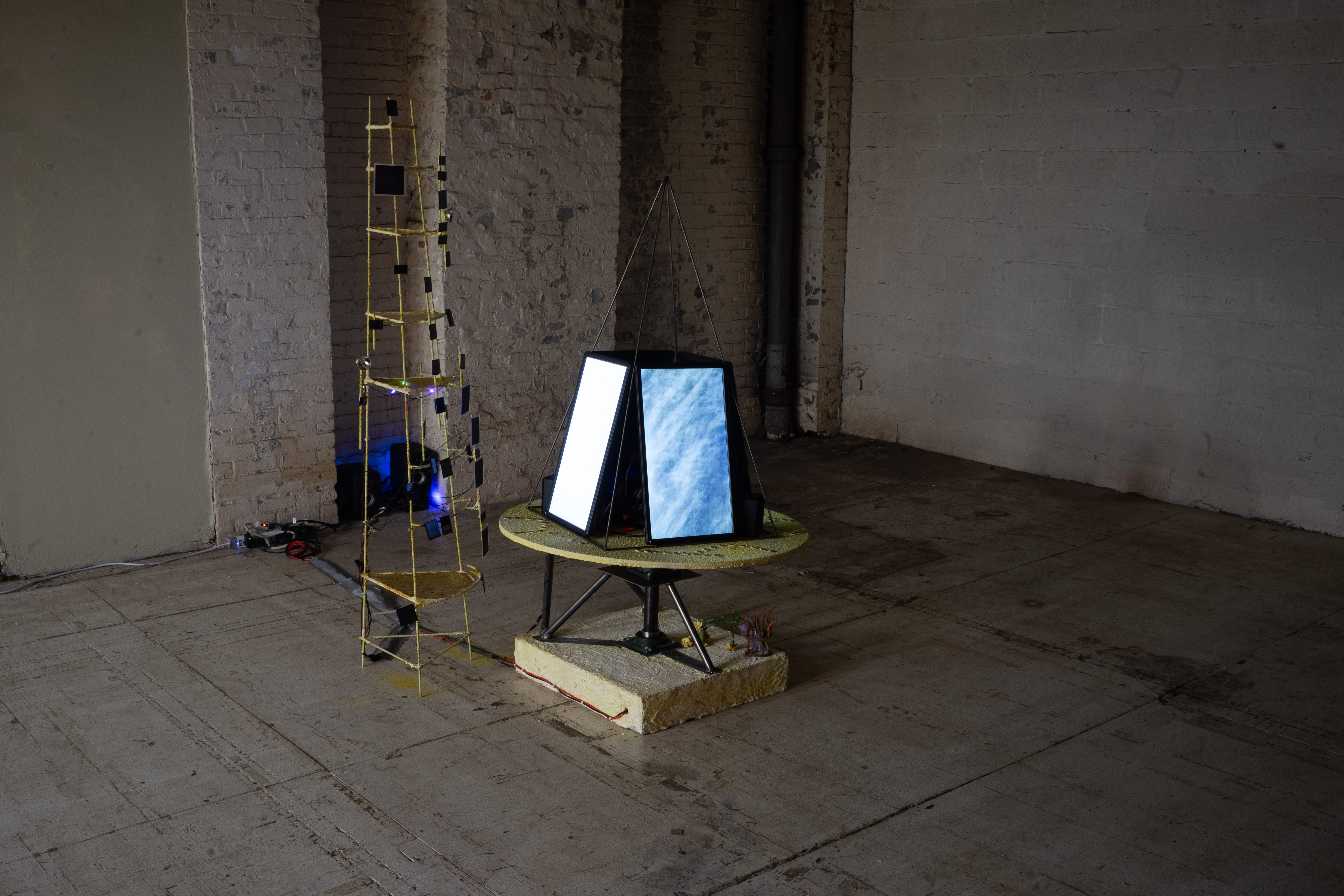
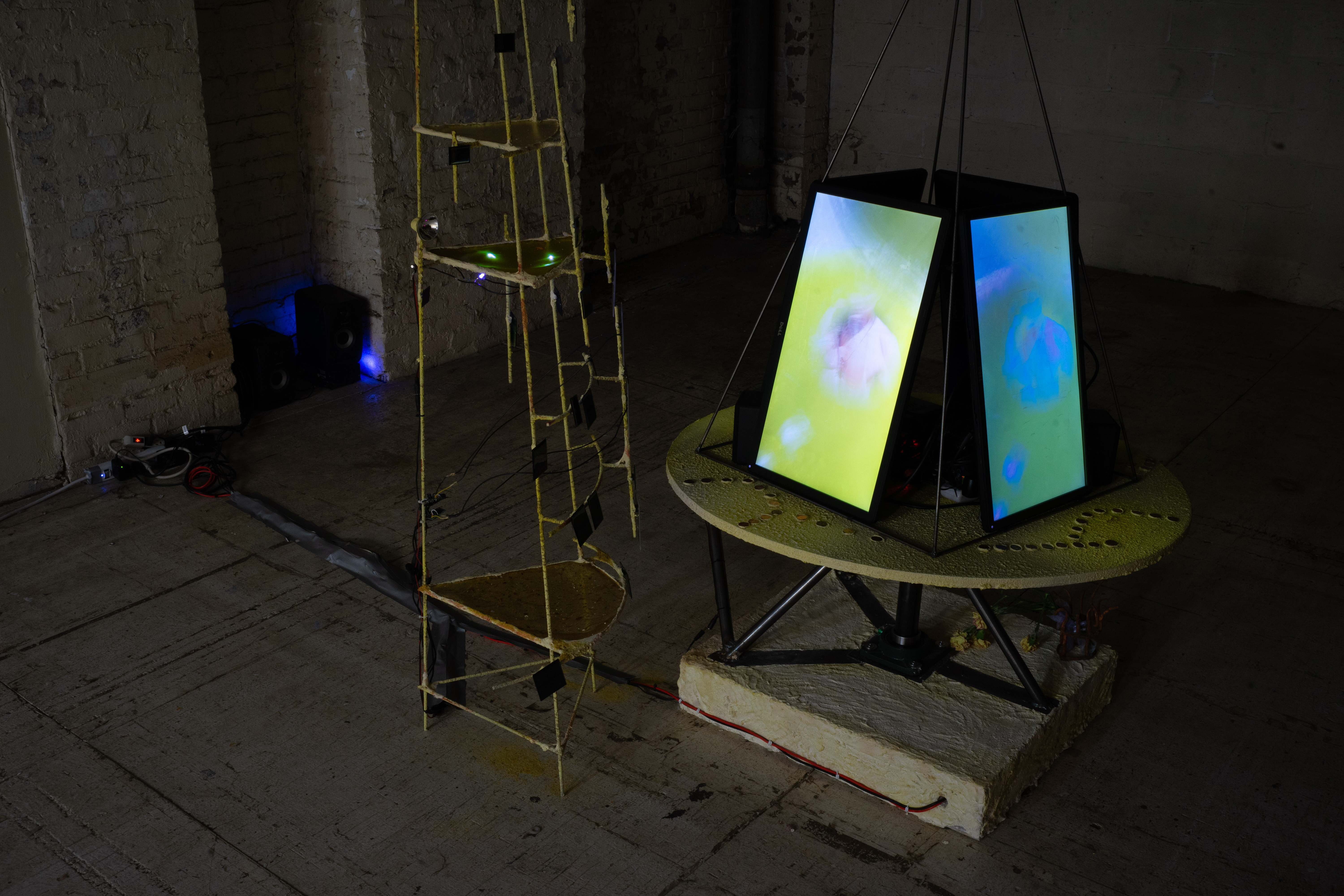
Sasha Fishman and Miles Scharff’s collaborative installation “Drinking Pennies at Midnight” is a complex system which renders the paranormal potential of our space into legible signals. Built in accordance with DIY guidelines from TikTok’s spiritual gurus and investigators, the artists’ technology investigates virtual, personal and empirically-calculable experiences, adapting the imperceptible to fit human senses.
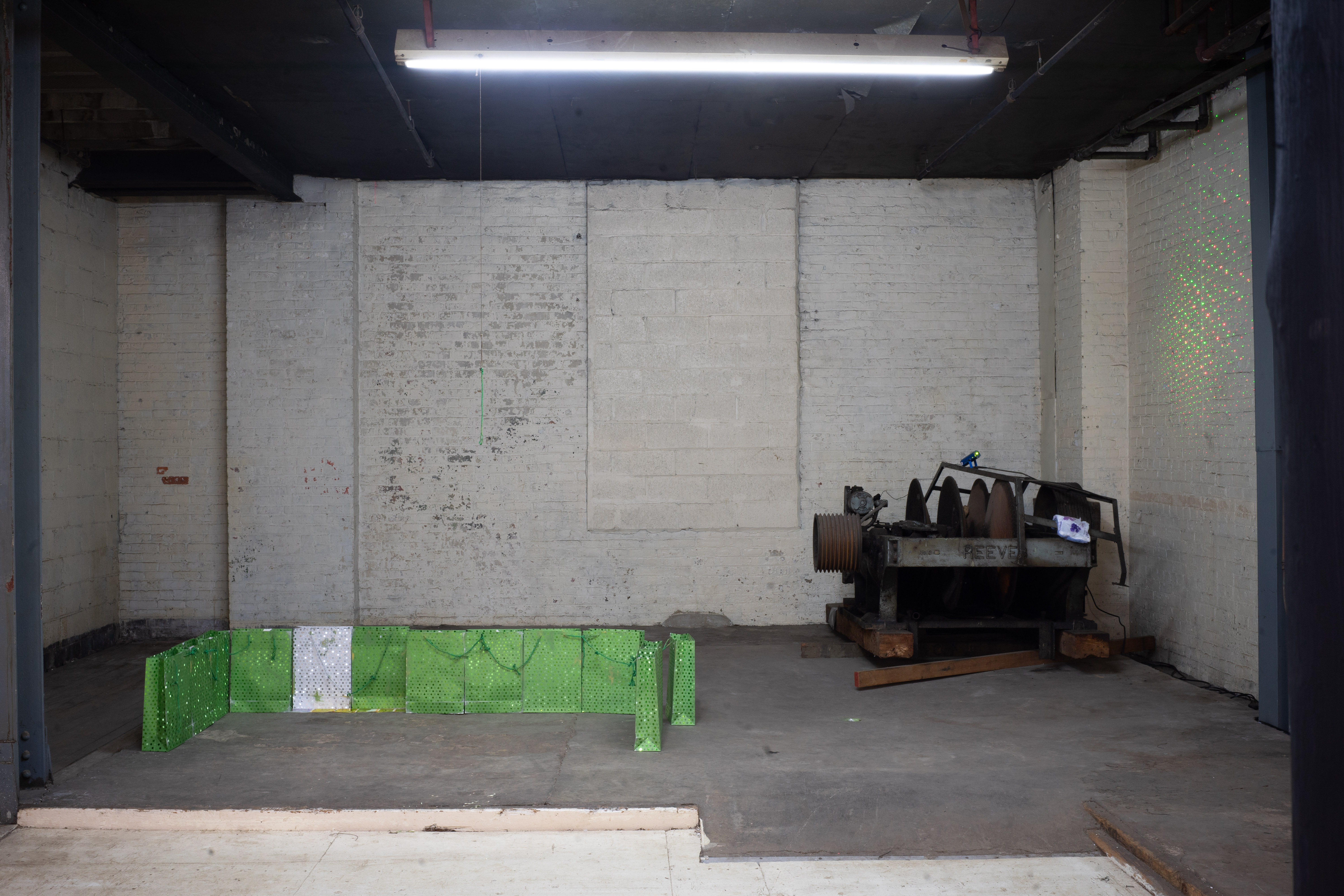
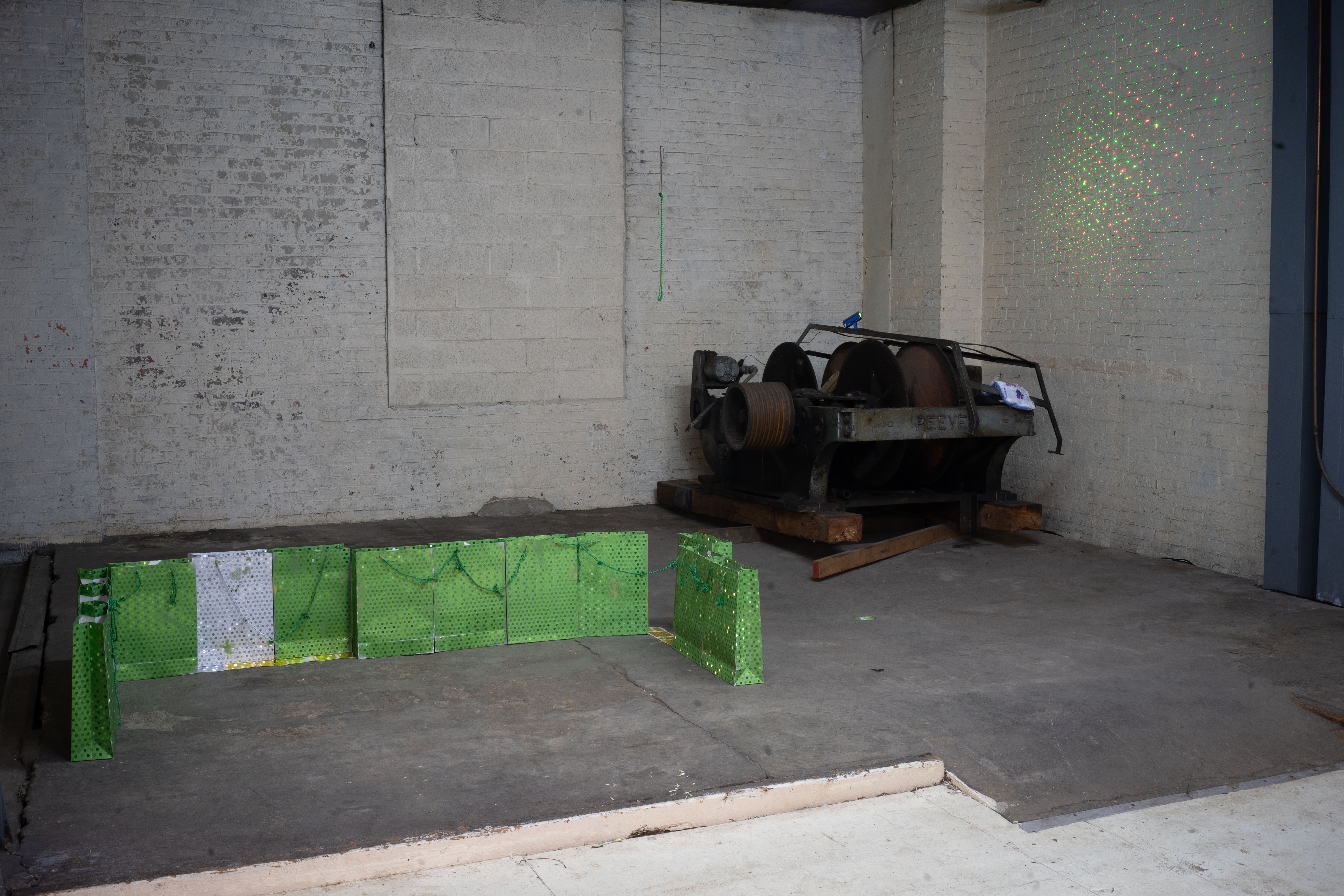
Diane Severin Nguyen’s “Dream Sam Nineteen” arranges birthday gift bags into a tableau of abandoned celebration, a party left behind to melt into the rust and decay of its surroundings. The bags are punctured, scratched, and tied together by the handles into a simple formation, forming a continuous body intertwined in a looping act of repair and disconnection.
Vadim Pugin’s “The Hands of the Pan” reimagines the ancient satyr, Pan, as a digital deity of
the modern age, embodying the insatiable hunger of AI-driven systems like Siri and Alexa for personal data. This digital Pan – a playful, bucolic figure in traditional mythic form – lures you into his serene forest with promises of highest conveniences and true connections, only to ask for one thing - surrender your privacy, your information, yourself.
Alex Shchurenkov’s “Age of Terror” encloses a corner with a divider, pierced by numerous “glory holes”, cut in various heights and surrounded by rings of tape to ensure comfort and ease of use. While the work partially shrouds the space behind its washes silver paint, it treats this privacy as a farce, a construct to be overcome as the wall is animated with use.
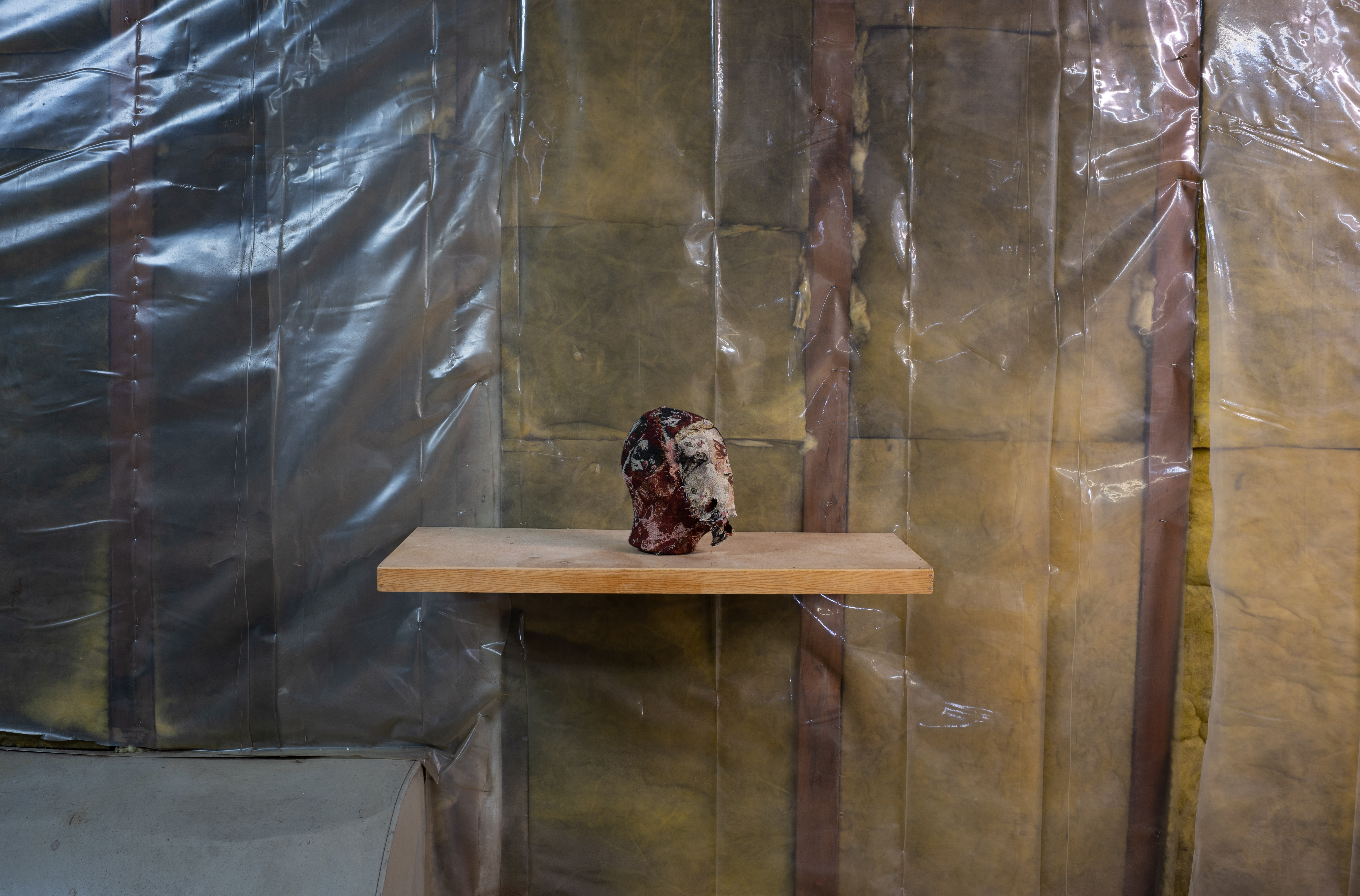
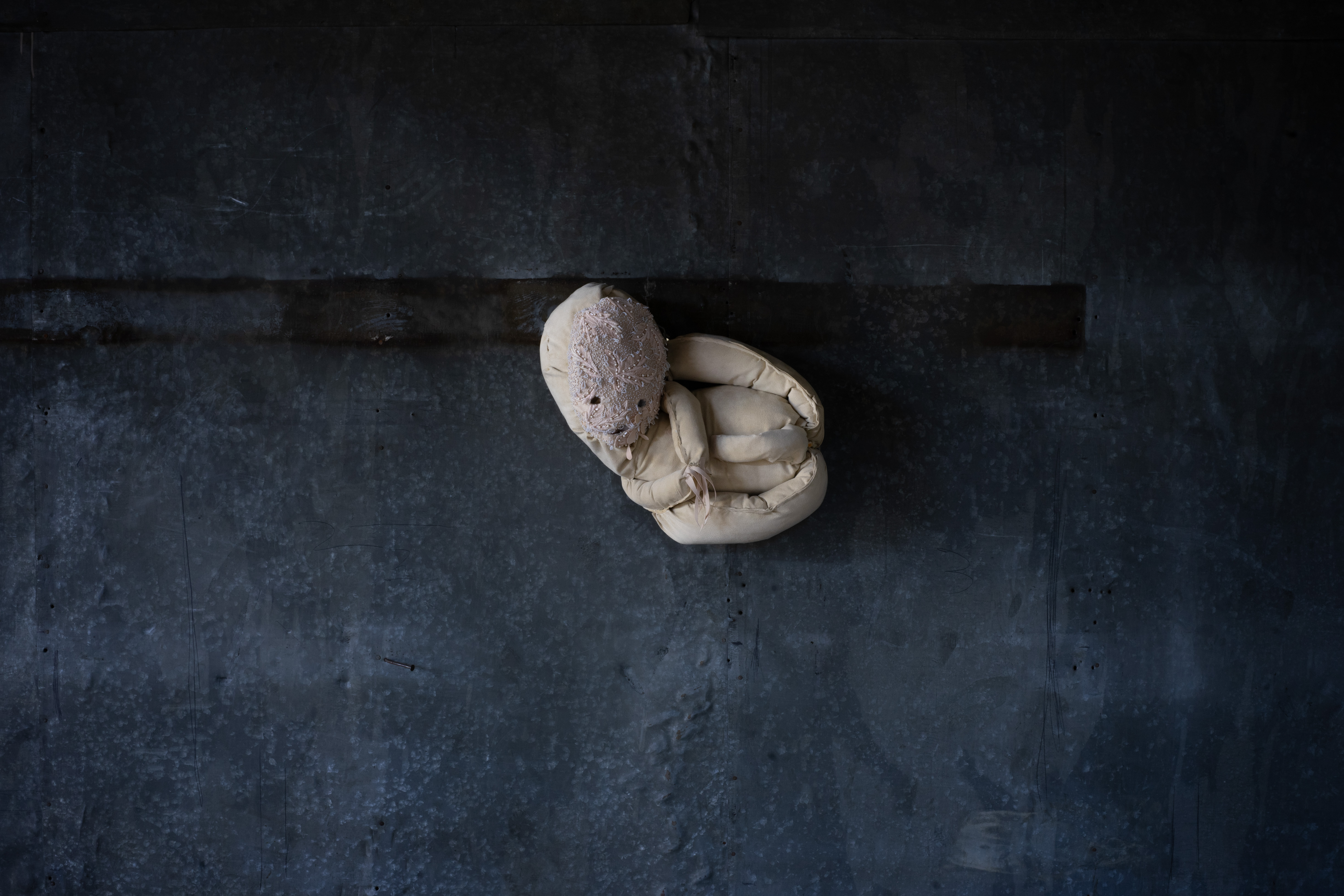
Ilya Fedotov-Fedorov’s “Between the Skins” features four deformed figures, accumulated in fleshy heaps around a cold, metal room. Working with printed carpets and balloons, Fedotov-Fedorov creates half-characters, half-masks that are distorted yet soft, eerie yet friendly. Eliciting pity and fear, they earnestly entreat the viewer for companionship, lest they be left to themselves.
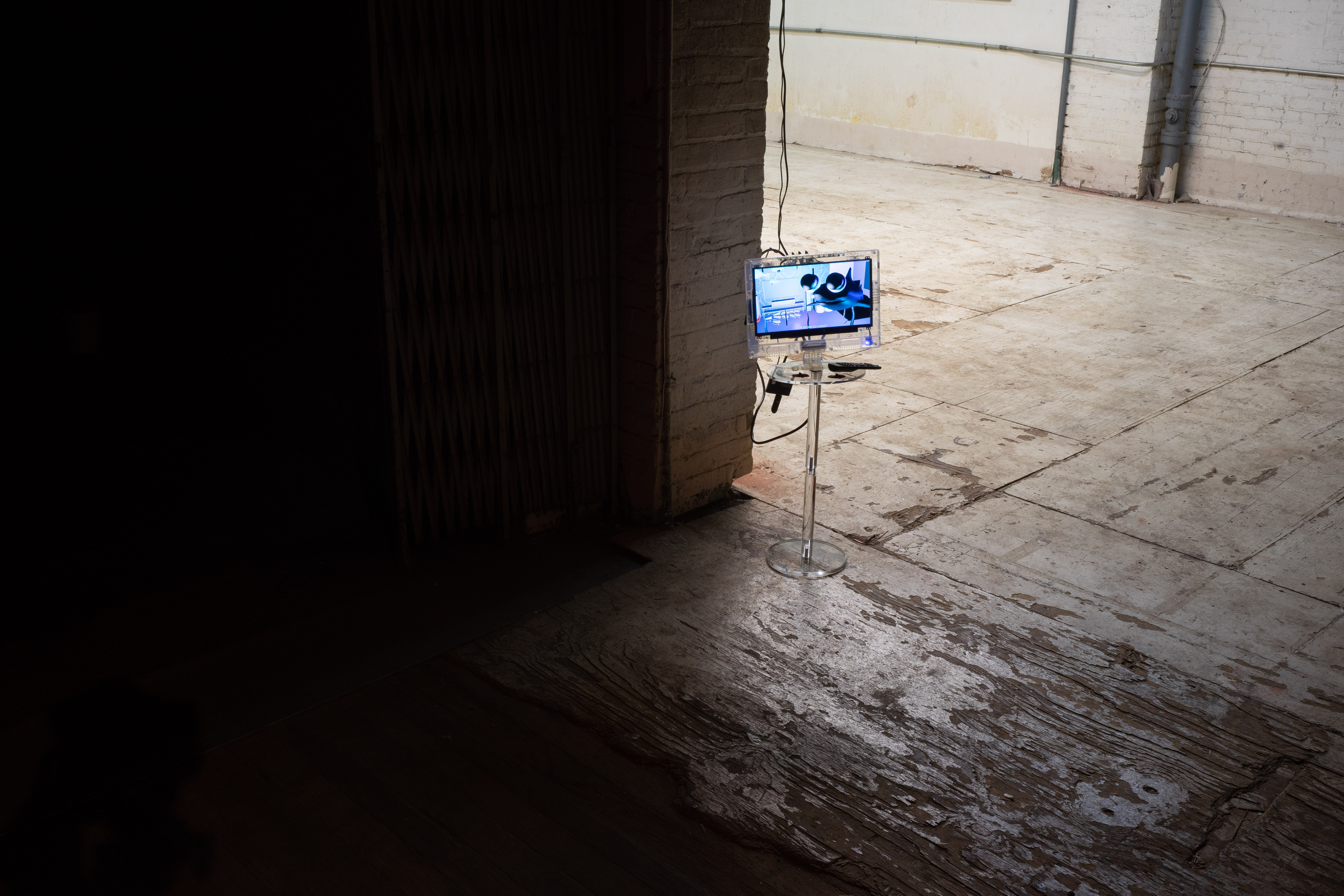
Dahlia Bloomstone’s video installation “R-SHARK WOKE UP!” draws viewers in with cute charm and glossy animation before lifting its saccharine veil, laying bare its investigation of affective labor. The work’s 3D-printed sharks and dress shreds are contextualized as souvenirs of police raids experienced by the artist while at work, and the trendy, clear TV is revealed to have been sourced from a prison – a surveillance object in operation since 2013, when the artist became old enough to legally work in clubs.
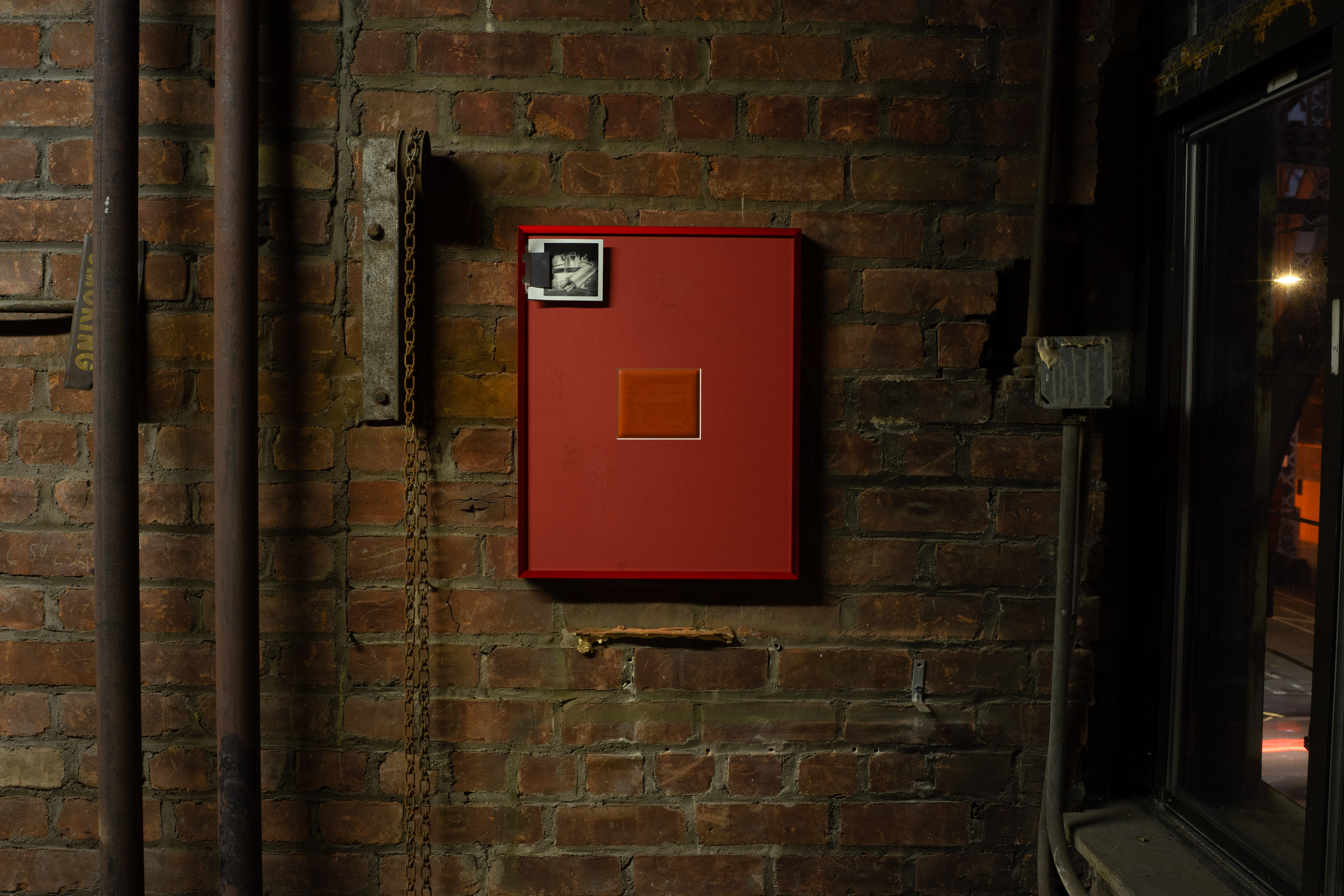
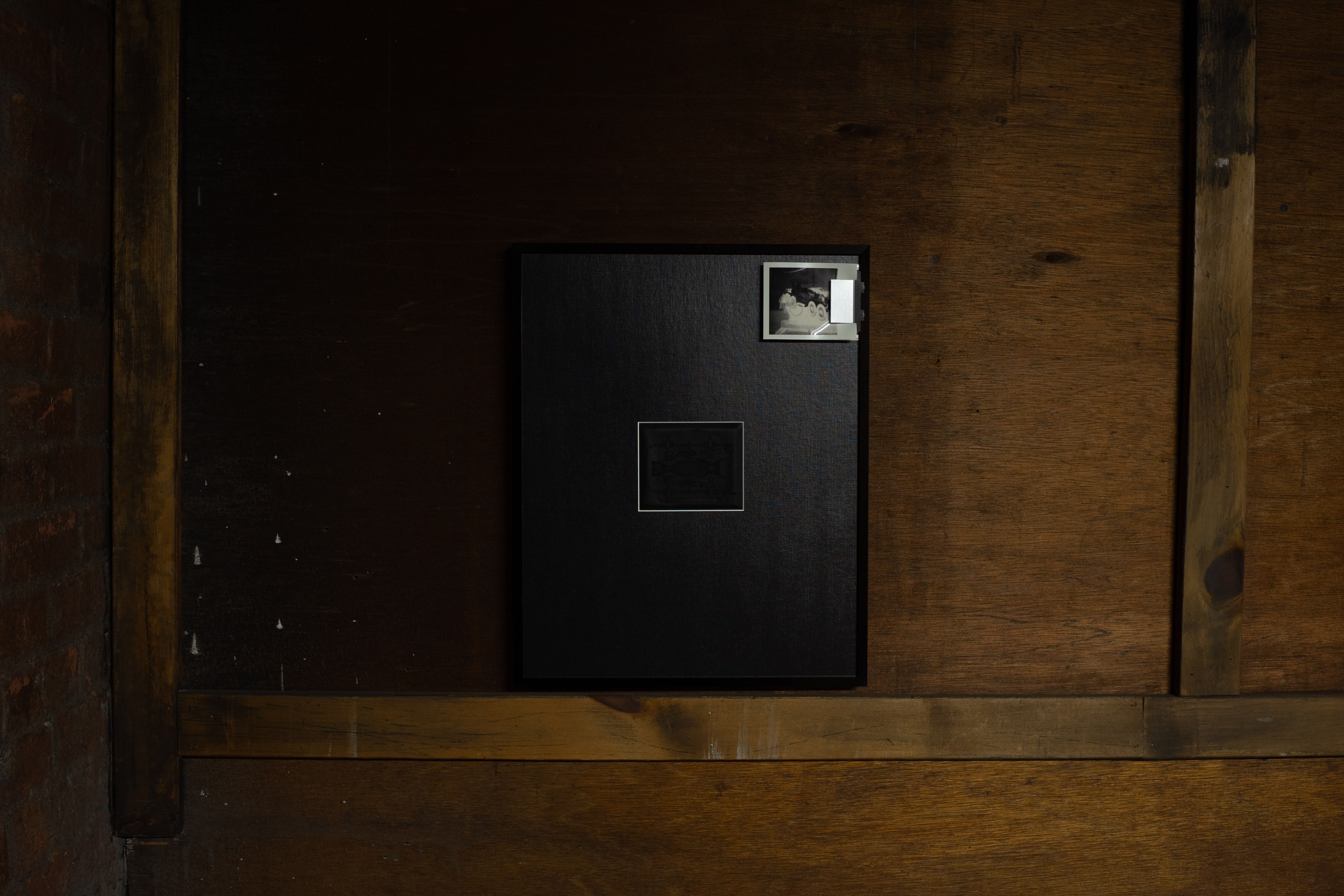
Craig Jun Li’s photographic works “Red: 40° 49’ 11.298» N 73° 57’ 30.702» W” and “Black: 40° 49’ 11.238» N 40° 49’ 11.238» N” produce a mind game constructed by the artist, challenging the viewer’s “sight, site, and citing” of information. The framed silicone and polaroids are to be considered newly produced artifacts of the room’s history, invoking the manufacturer Milton Reeves (who produced the space’s elevator) in a half-fictional, half-indexical document of missing links and false memory.
Cal Fish’s “Pre-York River: 12th Ave Terminus, Fields for Comfort Zones” channels site-specific audio through radio sets, allowing visitors to notice and interact with the space’s invisible dwellers. Flowing liquid in drainage pipes, magnetic fields of unknown metals, and artists who worked here in the past are all participants in the work, coyly choreographing listeners as they move through the space to find new sounds.
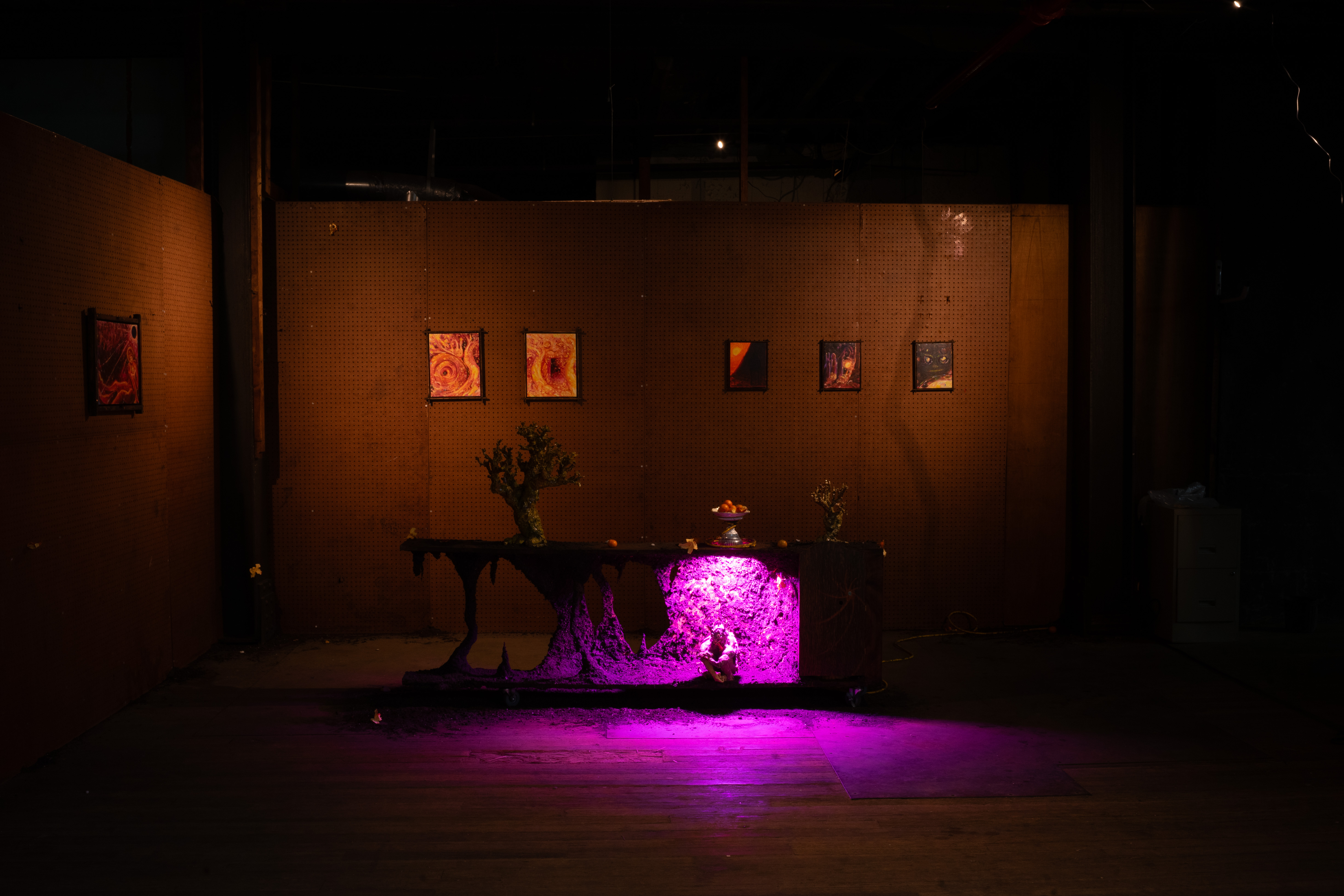
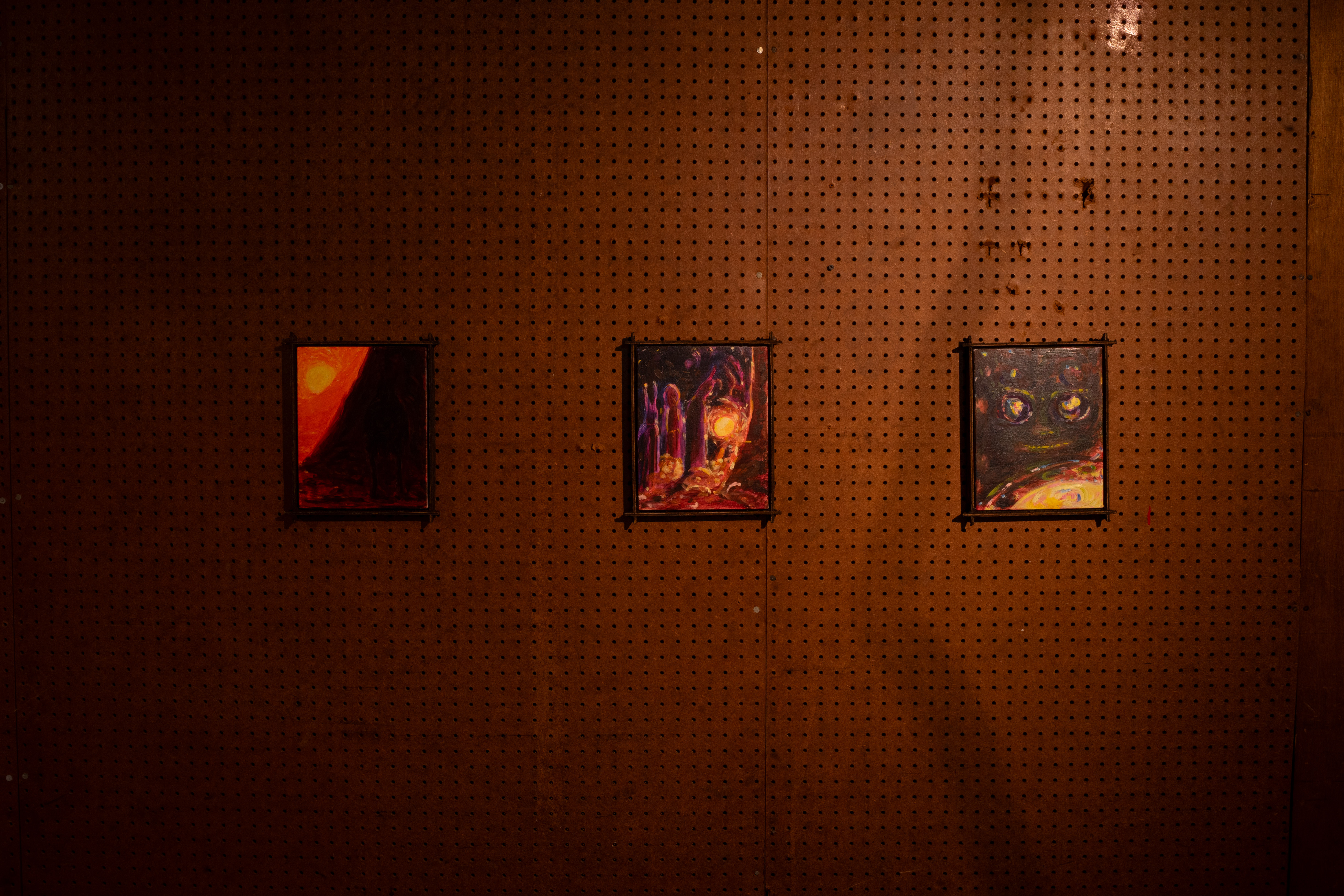
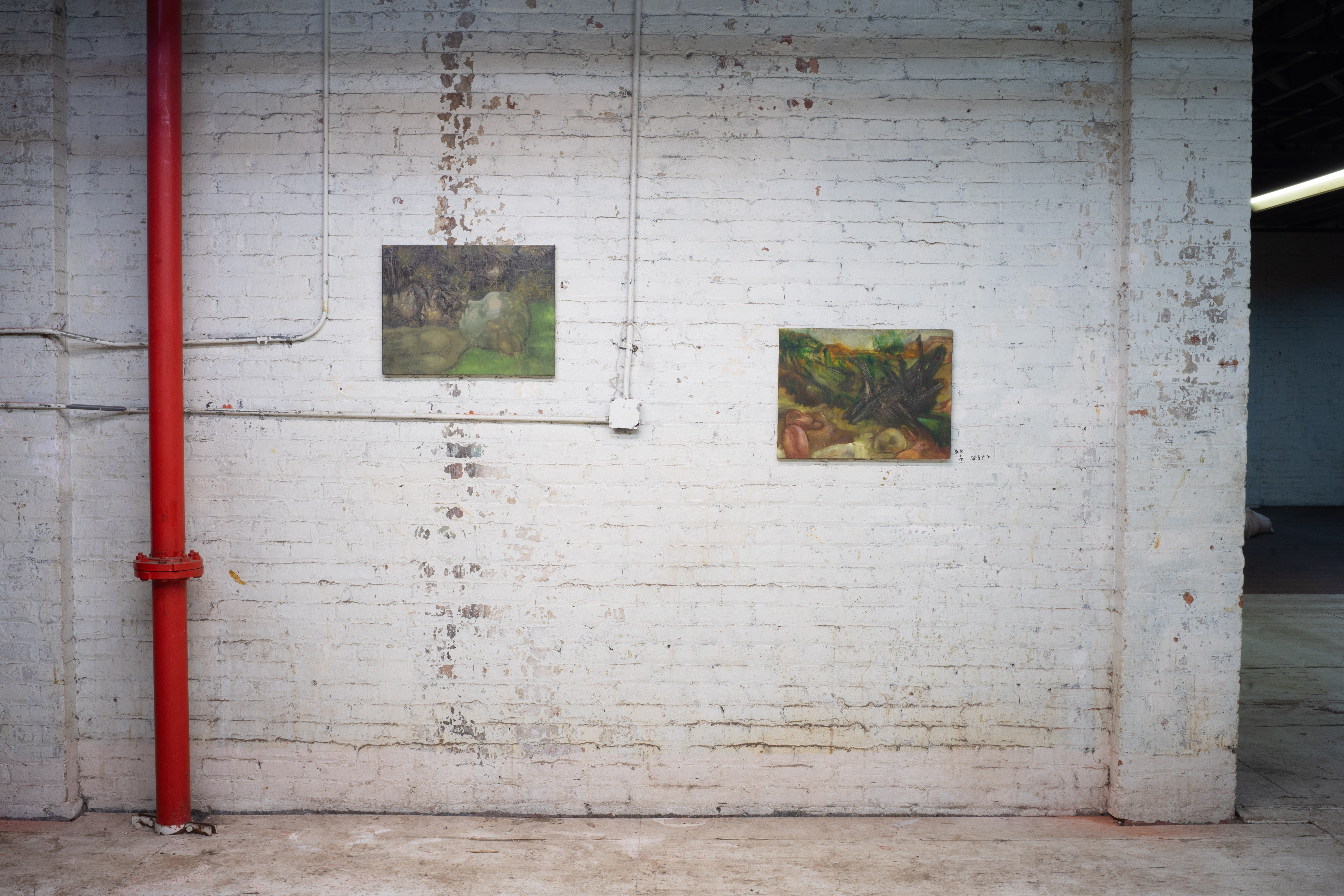
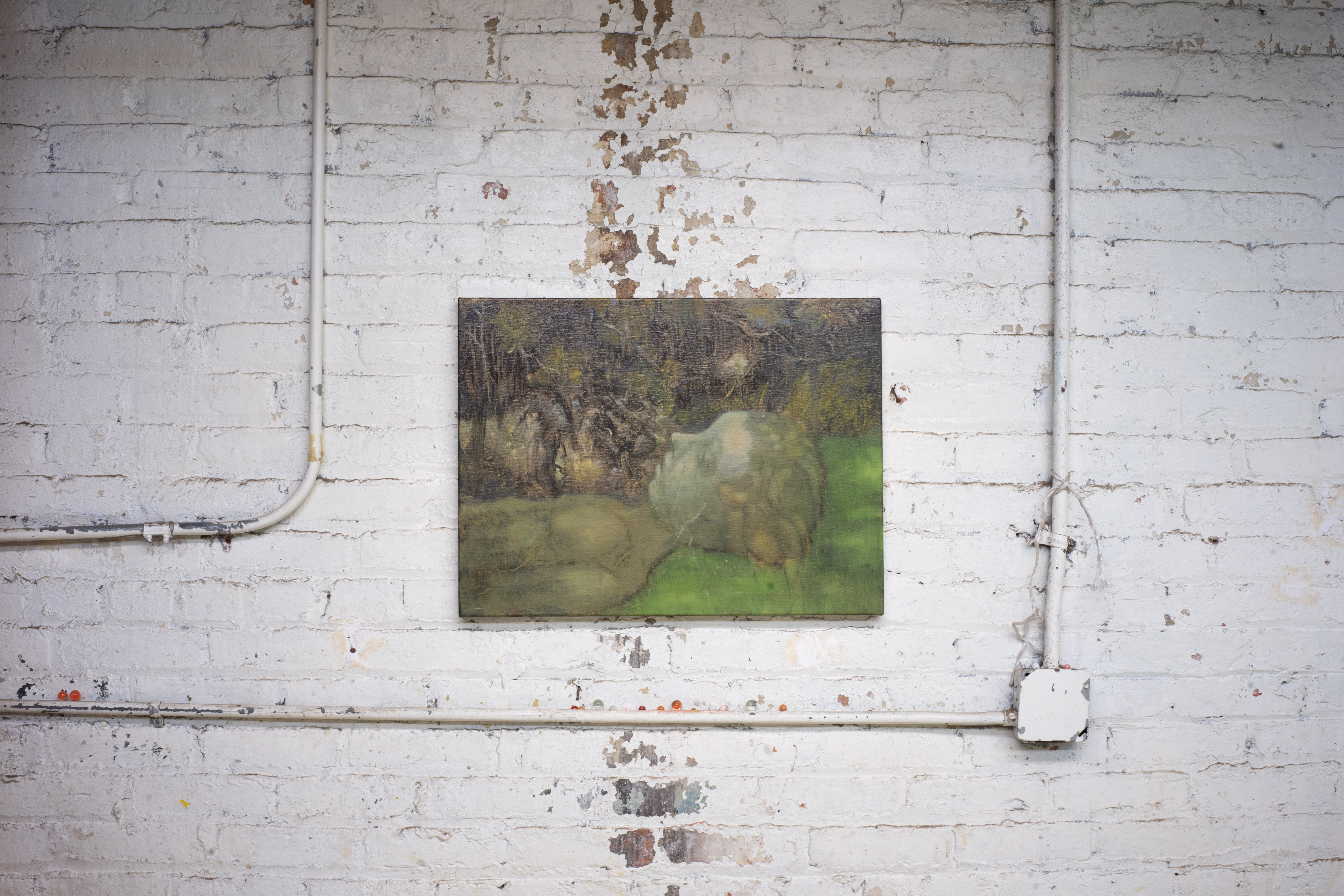
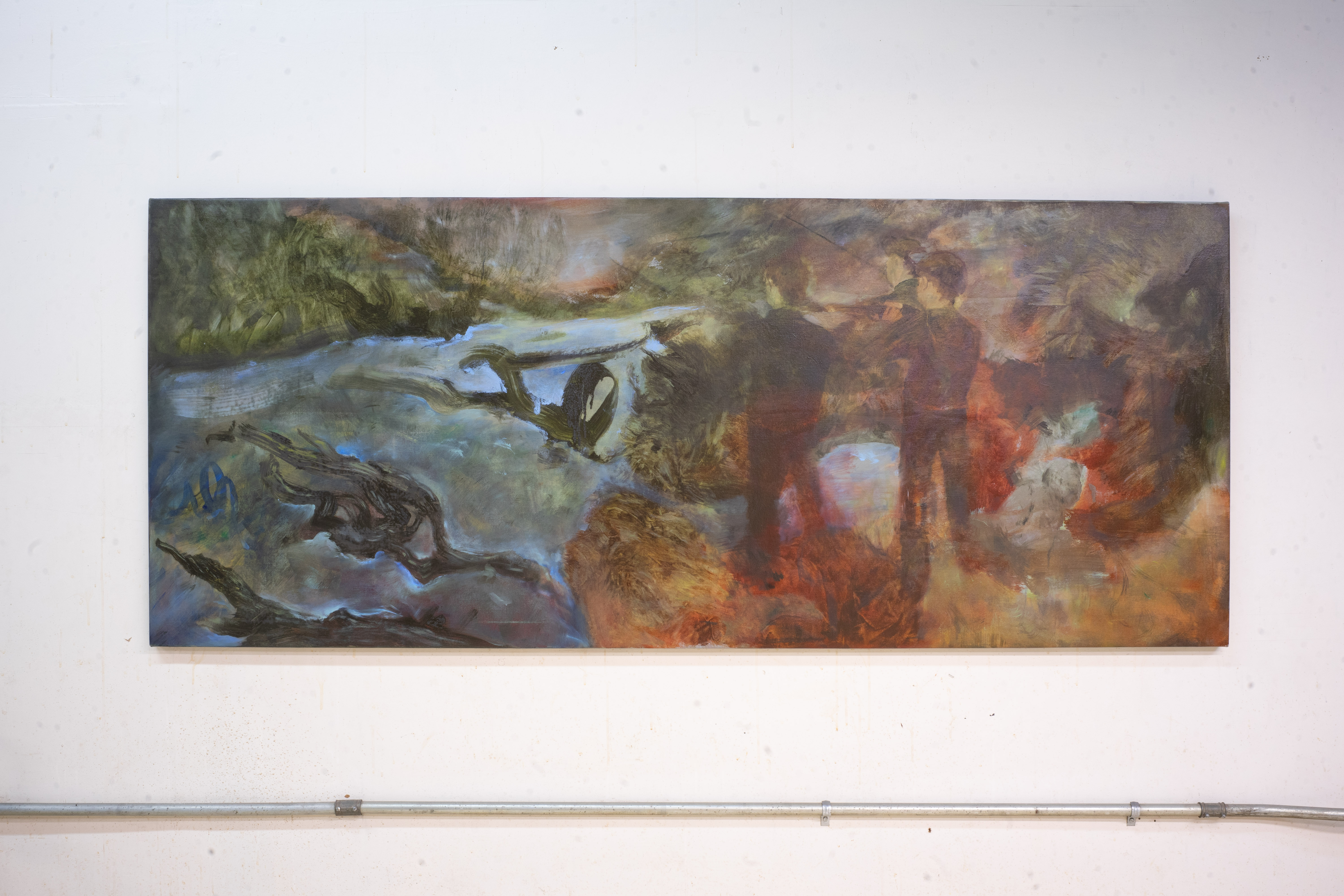
Dexter Vandersall’s paintings invokes pastoral, fictional views of his familial landscapes of the Appalachian South to produce gentle glimpses into stories of uncertain violence and disaster. Balancing softness and darkness in a suspended tension, Vandersall subverts the linearity of time and natural cycles of birth, destruction and decay by omitting actors of terror, choosing to populate his vistas with the ghostly peacefulness which follows grave acts instead.
Amadeo Morelos’s “Paintings and a Bookshelf” invites us into a shadowy room adorned with bright-colored paintings and an old bookshelf – a miniature world of peculiar comfort. Also occupying the shelf are a garden for yet-to-sprout flowers, a home for a peacefully sleeping kitten, and an underground cave of a small, ghoulish dweller, ominously smiling in his corner. Working on a fringe of fairytales and horror stories, Morelos builds dimly lit domains which bridge the territory of dreams and waking hours, a space of perplexing charm and mystery.
Miriam Simun’s “A Wet Chemical Trace” presents a post-extinction vision, an enclosed, sunless ecosystem of two plants, Agalinis acuta and Schizachyrium scoparium. Endangered agalinis acuta flower is present in this windowless, pseudo-archival closet through the vapor infused with its scent. As the smell is undetectable for humans in the wild, it was trapped and translated into a scent by Simun and chemists from International Flavors & Fragrances Inc. The vapor and a single dim grow light are the only things keeping Schizachyrium scoparium alive, a grass usually home to parasitic flowers, inverting this relationship as the data-driven scent feeds the bodies around it.